Showing posts with label Arthropoda. Show all posts

Tuesday, January 17, 2012

Entomological Society of Malta - vol. 4 launch

Last Friday saw the launch of the 4th volume of ESM's excellent series of papers dealing with, as the name of the society implies, the entomology of the Maltese islands and their biogeographic context.

The event was held under the patronage of His Excellency Dr. George Abela, and three society members (including its chairman) delivered short speeches on the importance of scientific research, peer reviews, funding and the maintenance of high publication standards. 


The scope of the talks ranged from the general, all-encompassing importance of works by luminaries such as Max Planck and Thomas Kuhn, to the specialized methodologies employed by scientists dealing in what the public may perceive as the "dinja stramba ta' dud, nemel u nsetti oħra" (lit. strange world of bugs, ants and other insects).

On to the main issue at hand - and its contents. This collection contains:

1) a catalogue of the aphid species occurring in Malta, with 48 new records, together with a list of aphid parasitoids, with three new records, and a new record of a coccid
2) observations and records of tachinid, rhinophorid and cecidomyiid flies from Malta and other Mediterranean areas
3) observations and records of nepticulid and pyralid moths from Malta
4) a catalogue of Maltese Scarabeoidea with eight new records, with a discussion on possible extinction mechanisms for these very interesting beetles
5) short features aimed at the younger demographic

A sample illustration - Scarabaeus (Ateuchetus) semipunctatus Fabricius, 1792 and Scarabaeus (Ateuchetus) variolosus Fabricius, 1787

The website was not updated in time for the launch, therefore for more information on the society please contact

Dr. David Mifsud
Entomological Society of Malta
P. O. Box 9
Marsa, MRS1000
Malta

Thursday, January 12, 2012

Death of a Phoenix

Palms are a common sight in Malta, with the warm temperatures affecting the islands throughout most of the year being a perfect catalyst for their growth and proliferation. This said, indigenous species amount to just one - the low-growing, bushy Chamaerops humilis L., now practically extinct in the wild.

Chamaerops humilis L., photographed by Aron Tanti

The recent invasion of the red palm weevil Rhynchophorus ferrugineus (Olivier, 1790) has affected several of the ornamental palms of the genus Phoenix.

Rhynchophorus ferrugineus (Olivier, 1790) from www.cm-oaz.pt
 
The date palm, Phoenix dactylifera L., is a historically important North African species that may be distinguished by leaves arranged in wide silvery fronds. The picture beneath shows this species of palm affected by the Rhynchophorus beetle.

Phoenix dactylifera L. affected by the red palm weevil in Santa Venera, Malta

Phoenix sp. in Rome, Italy, with the one on the right showing symptoms of red palm weevil infestation

Phoenix canariensis Chabaud is a Canarian endemic which is frequently planted around the Mediterranean, not least in Malta. Unfortunately it is also affected by the weevil in question and several stately specimens from around the island have been destroyed.

Phoenix canariensis Chabaud in the main road of Floriana, Malta

The inhabitants of Tenerife certainly make excellent use of their endemic palm species!

Saturday, August 6, 2011

In trouble


Butterfly pupa, with parasitic wasps. Aguamansa, Tenerife 2011.

Saturday, May 21, 2011

New marine biology papers

1. Mifsud, C. & Cachia, C., 2011. New additions and corrections, with annotations, to the check-list of the marine Mollusca of the Maltese Islands. Triton, 23: 10-18.

This paper is an addendum to the four volumes on marine mollusc records from the Maltese Islands by Cachia, Mifsud & Sammut (1991; 1996; 2001; 2004 - see full references below). In this paper, 99 additional records are mentioned together with a number of corrections of previous records.

Of particular interest is a second species of Paludinella for Malta. This minute snail is rare and lives in marshes, and previously only Paludinella littorina (Delle Chiaje, 1828) was known to occur. Samples from Salina Bay have yielded some individuals of Paludinella sicana (Brugnone, 1876).

A comparison of Paludinella sicana (Brugnone, 1876) and Paludinella littorina (Delle Chiaje, 1828), pictures taken from the Natuurhistorisch Museum Rotterdam collection

Also worthy of mention is the first Central Mediterranean record of the pyramidellid Leucotina eva Thiele, 1925.

2. Deidun, A., Galea Bonavia, F. & Schembri, P. J., 2011. Distribution of Tylos spp. in the Maltese Islands and population dynamics of Tylos europaeus. Journal of Coastal Research, SI 57: 369-372.

Tylos is a genus of woodlice, two species of which - Tylos europaeus Arcangeli, 1938 and Tylos sardous Arcangeli, 1938 - occur on two sandy beaches on island of Gozo. This paper examines their habitat and gives an account of yearly fluctuations in the former's population.

References:

Cachia, C., Mifsud, C. & Sammut, P., 1991. The Marine Shelled Mollusca of the Maltese Islands Part 1: Archaeogastropoda. Malta: Grima Printing & Publishing Industries; 112 pp.
Cachia, C., Mifsud, C. & Sammut, P., 1996. The Marine Mollusca of the Maltese Islands, Part 2: Neotaenioglossa. Netherlands: Backhuys Publishers; 228 pp.
Cachia, C., Mifsud, C. & Sammut, P., 2001. The Marine Mollusca of the Maltese Islands Part 3: Sub-class Prosobranchia to sub-class Pulmonata, order Basommatophora. Netherlands: Backhuys Publishers; 266 pp.
Cachia, C., Mifsud, C. & Sammut, P., 2004. The Marine Mollusca of the Maltese Islands Part 4: Caudofoveata, Solenogastres, Bivalvia, Scaphopoda and Cephalopoda. Netherlands: Backhuys Publishers; 270 pp.

Tuesday, April 5, 2011

Argiope revisited

After overwintering, the egg sac of the spider featured in this post has opened to reveal the hatched young. Few will make it to adulthood, and some of those which will, namely the males, will be devoured as a post-coital snack by the comparatively huge female.

Juveniles of Argiope lobata Pallas, 1772 - Siġġiewi
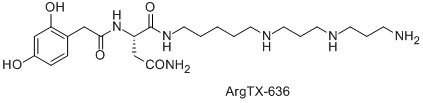
The species in question, Argiope lobata Pallas, 1772, is also being investigated as the source of the therapeutically useful toxins it produces to kill its prey.

Molecule of A. lobata's argiotoxin ArgTX-636, from Wikipedia
The photograph of the juvenile spiders comes courtesy of Mr. Patrick Tabone.

Wednesday, December 15, 2010

Entomological Society of Malta - vol. 3 launch

The launch of the annual third volume of papers in the excellent series by the Entomological Society of Malta took place this evening at the sumptuous Casino Maltese in Valletta. The occasion consisted of short talks and a presentation on what is included in this journal, entitled Bullettin of the Entomological Society of Malta.


The contents of this issue are:
1) A first Maltese record of a non-pollinating wasp of Ficus sp.
2) A review of the tineid moths from Malta including the description of a new species - Euthria melitensis Gaedike & Zerafa, 2010
3) A review of the Maltese Heteroptera with seven new records
4) A survey of potentially disease-carrying mosquito species in Malta
5) A review of the weevils of the Maltese Islands with 51 new records
6) A section aimed at young entomologists

Another moth was described in the second issue of the journal from 2009; this was Stichobasis postmeridianus, shown below. Both are, as far as is known, endemic species.

Stichobasis postmeridianus Zerafa & Sammut, 2009

For information on how to obtain Volume 3 or any of the previous ones please contact:

Entomological Society of Malta
P. O. Box 9

Marsa MRS1000

Malta

Monday, September 27, 2010

Tourism & Biodiversity

The 27th of September is World Tourism Day. The Malta Tourism Authority is celebrating this year's theme - "Tourism & Biodiversity" - by issuing a set of four stickers which feature typical organisms of the Maltese Islands.

Understandably, the variety of flora and fauna pictured is diverse and includes a plant, two invertebrates, and two vertebrates. These are, respectively:
  1. Capparis orientalis Veillard (noted on the sticker under the synonym Capparis spinosa L.);
  2. Papilio machaon melitensis Eller, 1936 (an endemic butterfly);
  3. Echinaster sepositus sepositus (Retzius, 1783);
  4. Epinephelus marginatus (Lowe, 1834) (noted on the sticker under the synonym Epinephelus guaza L., 1758);
  5. and the Maltese national bird Monticola solitarius L., 1758.
Please click on image for larger version!

Wednesday, September 22, 2010

Sex! Murder! Cannibalism!

It looks like the blurb for some low-budget 70's horror flick, but such storylines are relatively commonplace in the arthropod world. Argiope lobata Pallas, 1772 is a spider displaying extreme sexual dimorphism - the small male is seldom seen, but the female is one of the largest arachnids found in the Maltese Islands.


As in some other arthropods of the sexually dimorphic ilk (e.g. praying mantises and crabs), the hapless male is frequently cannibalized by the female (seen in the pictures above) following mating. It is mainly seen in humid and shaded habitats suspended head downwards from its very strong web, patiently waiting for prey.

A hardy egg sac like the one below is subsequently constructed nearing the end of the summery season. Hundreds of small spiders hatch and spend the winter inside this sac, emerging in spring.


The images in this post come courtesy of Mr. David Dandria and Mr. Patrick Tabone.

Wednesday, August 4, 2010

Odds and ends

Not much time on the laptop on my part has meant a lack of recent blog updates, and for this I do apologize profusely. In the meantime, I have been working on a couple of research papers, two of which which have been submitted and accepted, and some others which are still a long way from being final.

Meanwhile the summery world outside is buzzing with activity, as can be exemplified by the beautiful Xylocopa violacea (L., 1758) below.


This bee is also known as the carpenter bee due to the fact that its eggs are laid inside purposely-bored wood or stems. During my observations I have noticed that the Arundo donax reed is a favoured home for this species.

While the invertebrate world is teeming with insects, however, molluscan representatives are few and far in between, owing to the terrible heat of the Mediterranean summer. The non-marine gastropods that never need worry about this are, of course, those who call freshwater their home, like this Physella acuta (Draparnaud, 1805) from Chadwick Lakes:


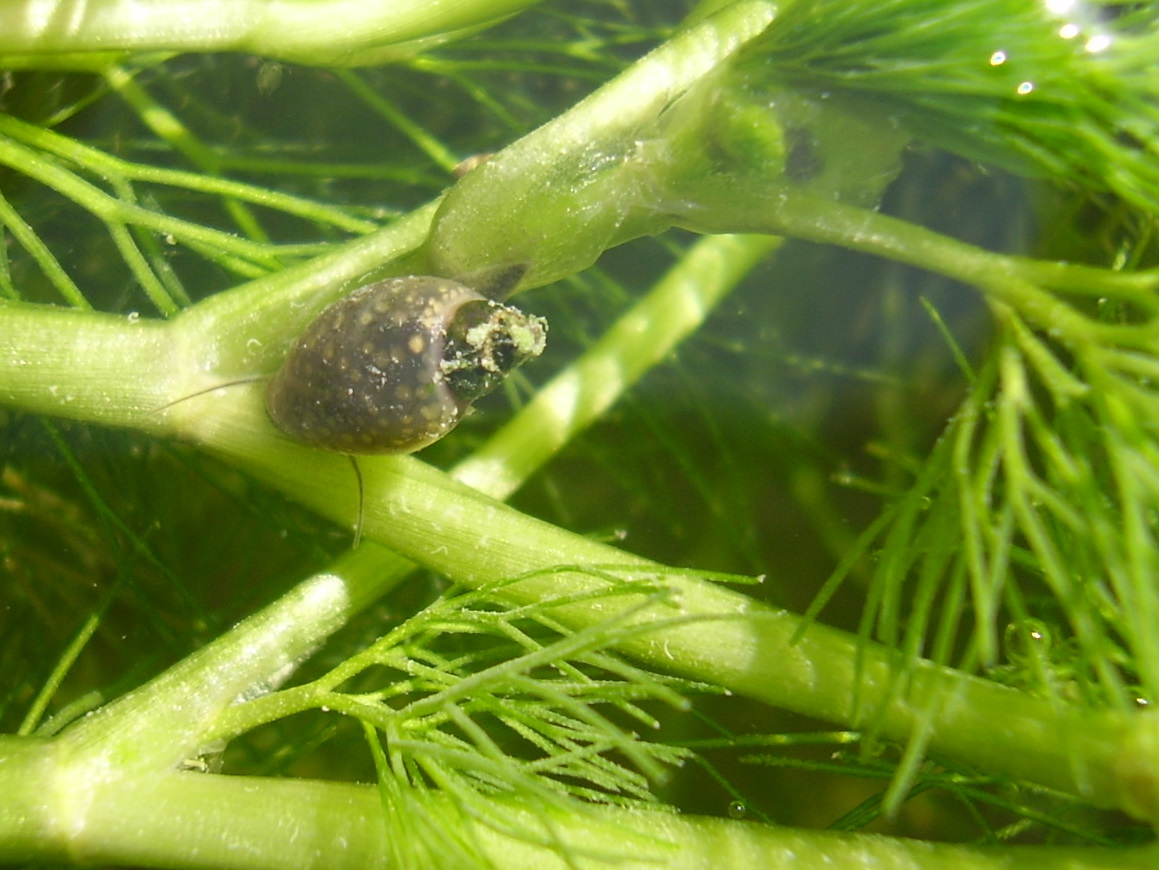
Many natural freshwater bodies boast sizable populations of this snail. Other species are much rarer, such as these minute (3mm) Mercuria cf. similis (Draparnaud, 1805) from a Gozitan population:


Sunday, June 20, 2010

Another garden visitor


It's another butterfly - smaller and much less conspicuous than its relative which I wrote about this week - yet just as beautiful and interesting. According to Sammut's definitive book on the Maltese butterflies and moths, this is Syntarucus pirithous (L., 1767), which is frequently encountered throughout the warm season.

Reference:
Sammut, P., 2000. Il-Lepidoptera. Kullana Kulturali, 12: 1-246. Malta: Pubblikazzjonijiet Indipendenza.

Sunday, June 13, 2010

A lepidopteran pit stop

A frequent migrant in June is the elegantly-named butterfly Vanessa (Cynthia) cardui (L., 1758), passing over Malta from North Africa on the way to cooler European climates. The following pictures, taken yesterday in Santa Venera, show a very small sample of hundreds of individuals feeding on the nectar of cultivated plants, before continuing their journey. They seem to prefer the Lantana shrubs above anything else, though this may be because of the flowers' bright yellow colour - purple-flowered Lantana shrubs were hardly visited.


Monday, April 19, 2010

Sinister sphinxes?

Hyles (Rommeliana) sammuti Eitschberger, Danner & Surholt, 1998 -
Buskett 11.XI.2009

This is the larva (caterpillar) of an endemic moth from one of the most aesthetically pleasing families in the Lepidoptera, namely the Sphingidae. Before its description in 1998, Maltese specimens belonging to Hyles sammuti Eitschberger, Danner & Surholt, 1998 were thought to belong to Hyles euphorbiae (L., 1758), a common Mediterranean species, due to similar morphology and habitat.

An adult specimen of H. sammuti may be seen below, this photograph is taken from the excellent Sphingidae of the Western Palearctic website.


The sphingids found on the Maltese islands also count amongst their ranks the infamous Acherontia atropos, (L. 1758) - undoubtedly the most famous lepidopteran amongst cinema buffs worldwide.

Tuesday, April 13, 2010

Bugs!

Few arthropods have appeared on this blog so far, so here's a trio of specimens from that marvellous group known as the Coleoptera:

Ocypus olens (Müller, 1764) Għallis Point 31.X.2009

Oxythyrea funesta (Poda, 1761) - Chadwick Lakes, 25.II.2010

Blaps gigas (Linné, 1767) - Għajn Tuffieħa 23.IX.2009

According to biologist J. B. S. Haldane, if a Creator exists he must have 'an inordinate fondness for beetles'*. Whatever one's religious persuasions (or dissuasions) are, there can hardly be any doubt about the accurate implications of his statement.

*Hutchinson, G. E., 1959. Homage to Santa Rosalia or why are there so many kinds of animals?. American Naturalist, 93: 145-159.